
We are delighted to share an update on the REHEATZ project – an exciting initiative tackling sustainability challenges in food production by capturing and reusing waste heat.
Build It officially joined the REHEATZ project on 2 April 2025, working on the installation of a full-scale wastewater heat recovery system at Zambeef Huntley Farm in Chisamba.
We are proud to announce that construction is now complete.
How it works
Food processing often uses large amounts of hot water – much of which is simply thrown away. The REHEATZ project aims to change this by recovering and reusing this heat. This will help reduce energy use, costs and carbon emissions.
In the first stage of the installation at Zambeef, hot wastewater from a boiler passed through a series of steel heat exchangers. These exchangers were surrounded by cold fresh water. As the steel was heated by the hot wastewater, the heat was transferred to the fresh water. Once the fresh water was heated, it was pumped into a series of storage tanks.
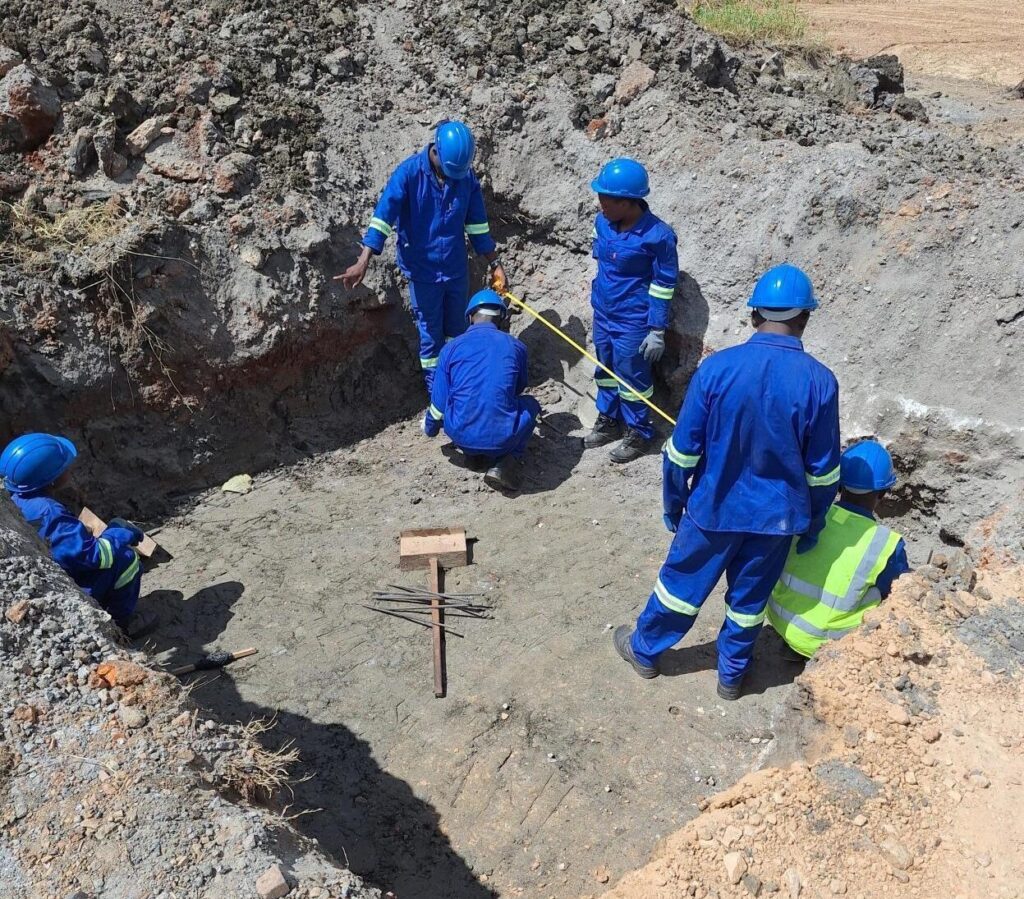
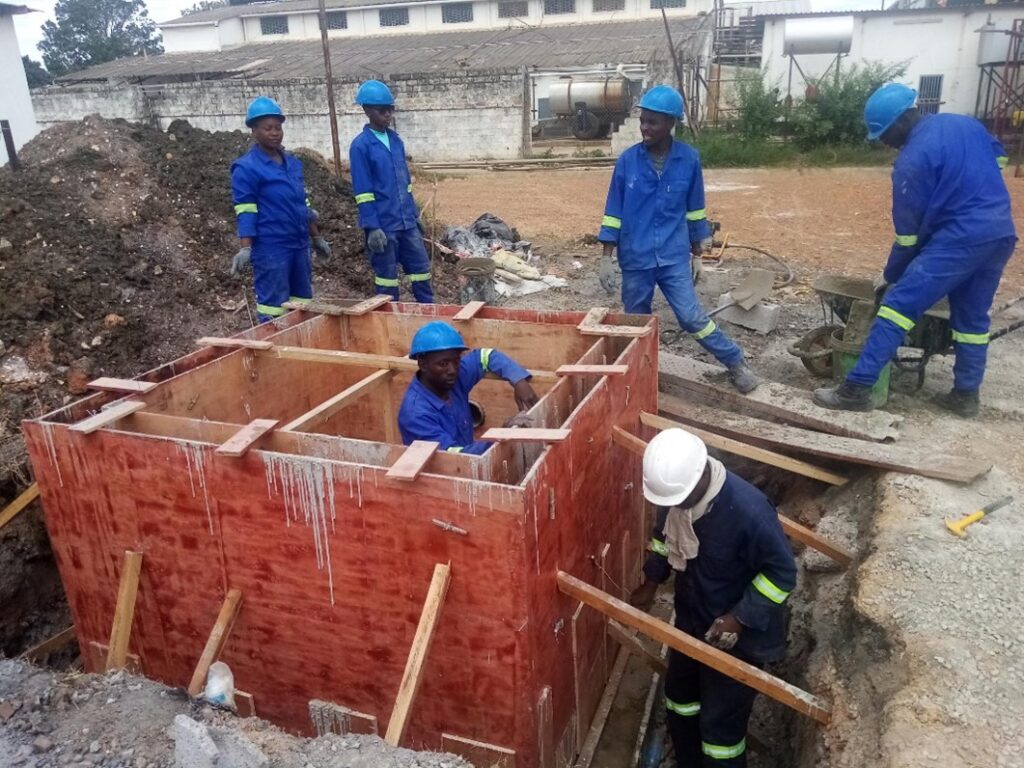
To fully integrate this heat recovery into the factory, the now preheated fresh water needs to go back to the facility. This upgrade required the construction of new heat exchangers, a concrete structure to house the heat exchangers, and new piping to connect the fresh water holding tank, heat exchangers, and the water treatment system.
Watch the Youtube video of BII graduates Peter and Mercy explain how the system works
Training young people in green construction
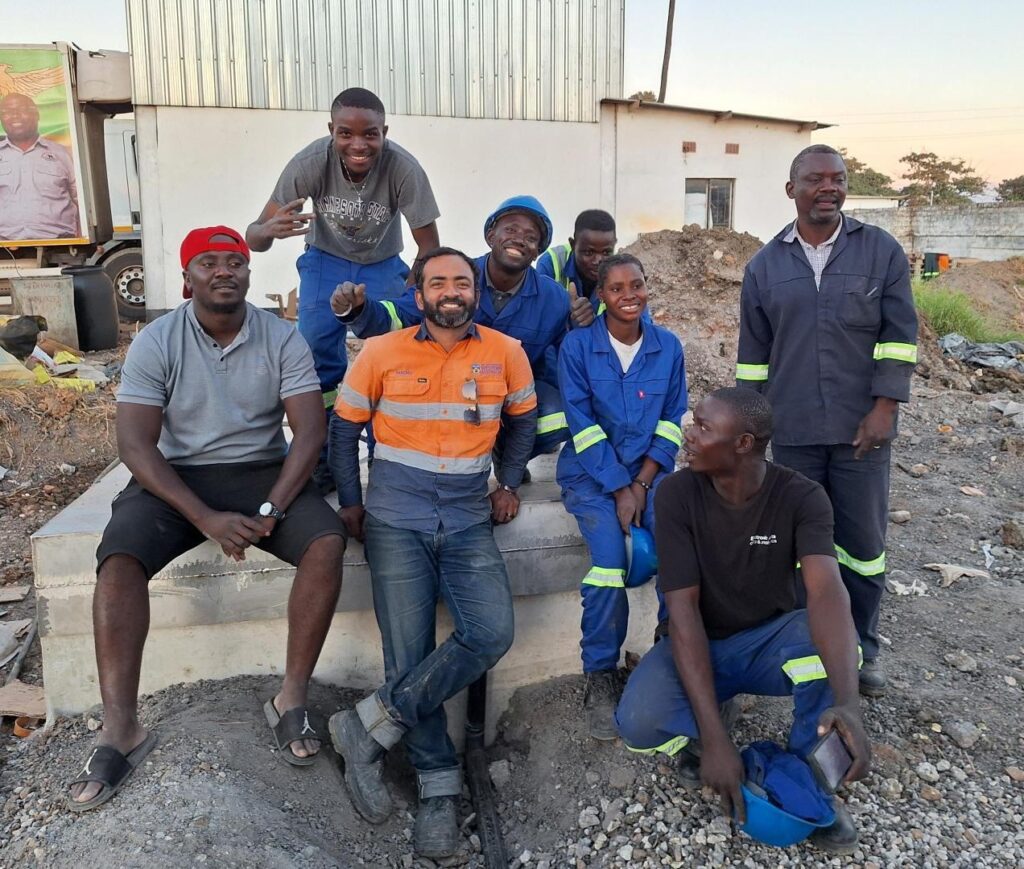
Build It aims to support more young people gain green skills to create sustainable infrastructure. Six Build It construction graduates went through a short upskilling course in plumbing, to support the installation of the new heat recovery system.
Once trained, the team got straight to work starting with the concrete pour for the new hot well to hold the heat exchangers.
In addition to concrete pouring and curing, the graduates used their skills in wooding shuttering, steel fixing, and plumbing to complete the installation.
The REHEATZ project is led by Trinity College Dublin and the Southern African Institute for Policy and Research (SAIPAR). Dr. Madhu K. Murali from Trinity College Dublin praised the graduates, saying the installation would not have been possible without their dedication and hard work.
Next steps
Now that the system is in place, Zambeef Huntley Farm will see a reduction in the use of coal in its food production. This will be monitored throughout the year. The reduction in coal will help cut both emissions and fuel costs. This is a strong example of how green technology can make industry more sustainable.
As Zambia’s construction and manufacturing sectors continue to grow, it is vital to include more environmentally friendly practices. By working together, Build It and REHEATZ are helping to ensure more young people have access to the green jobs of the future.
Personal story
Cloud Shibombi, a father of two from Chisamba, was one of the Build It graduates involved in the project.
Initially trained in bricklaying and plastering, Cloud embraced the chance to upskill – gaining skills and hands-on experience in steel fixing, plumbing and boilers, including heat exchangers and heat recovery systems.
“Going forward, I will be able to not only build but do plumbing works as well because I’m more knowledgeable and skilled,” says Cloud.
For Cloud, these new skills mean greater employability and future ambition. He is now looking at strengthening his plumbing knowledge and becoming a supplier of plumbing materials in his community. Cloud used his earnings from the project to complete his family home.
Cloud recognises the economic and environmental impact of the project:
“Before the company spent a lot of money buying coal. Now, that money can go towards something else. And there’s less smoke which is a positive thing for the environment.”