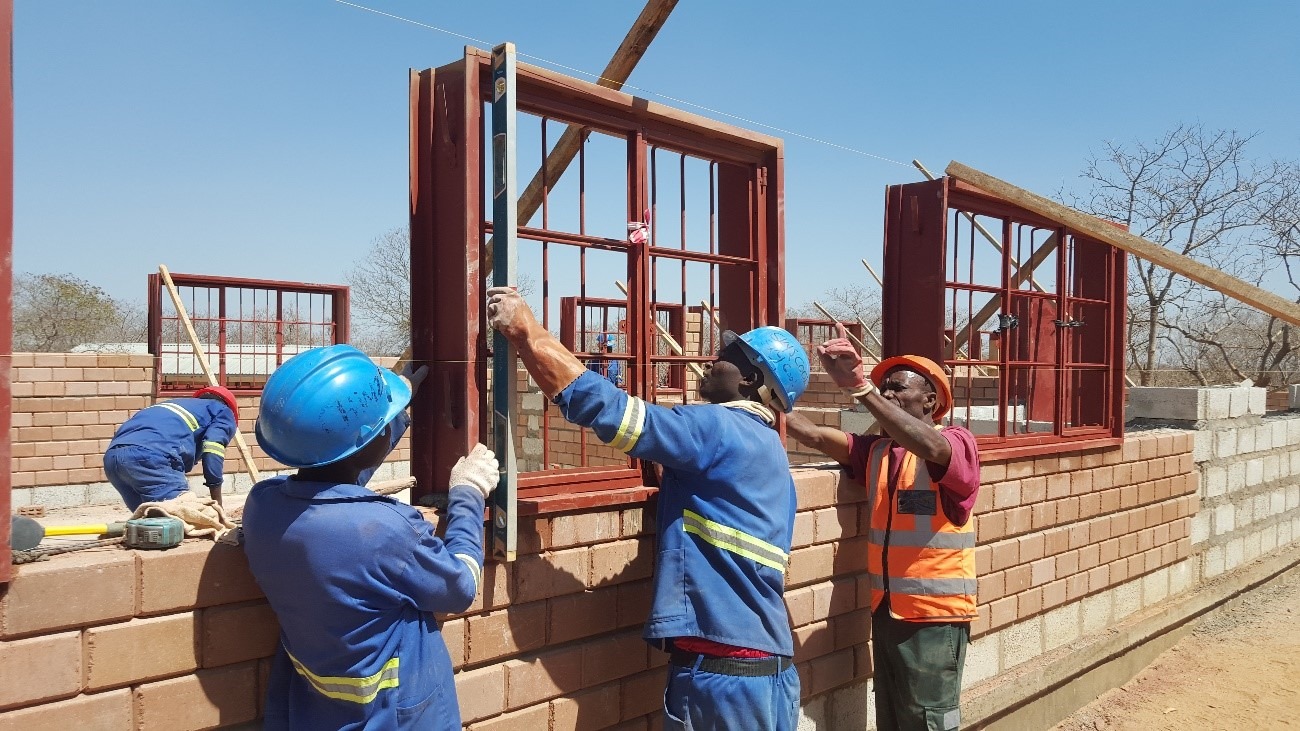
Around 3 million young people in Zambia are currently not in education, employment, or training (NEET). This presents a major challenge, but is also an opportunity to unlock potential and drive growth.
Build It International is pleased to announce an exciting new partnership with Liechtenstein Development Services (LED) to pilot youth economic engagement through Work-Based Learning (WBL) in Zambia’s construction sector.
UNESCO-UNEVOC outlines WBL as learning that happens through real work – whether paid or unpaid. Unlike traditional classroom training, WBL immerses learners in practical, hands-on experiences within real-world settings. Common examples include apprenticeships, internships, and traineeships. They all help individuals build valuable skills and knowledge directly relevant to their chosen industries.
High youth unemployment, and a mismatch between skills training programmes and the needs of the construction industry remain pressing issues. WBL provides a vital bridge between training and employment, helping to align skills development with real industry demand. This creates stronger pathways into work.
Running from July 2025 to January 2027, the YEEC project aims to pilot an accredited, scalable WBL model in the construction industry. It aims to equip young people with practical, industry-relevant skills – helping them become more employable and supporting the sector’s growth.
Mildred Mwakamui, Build It Programme Manager – Work Based Learning said:
“At Build It, we know that training alone is not enough – young people need opportunities to apply their skills in real workplaces. This partnership with LED is an exciting step forward in creating these opportunities, giving young people a better chance to earn an income and build a future in construction.”
Miriam Speh, Project Manager at LED said:
In Zambia, LED – Liechtensteinischer Entwicklungsdienst – focuses its support on Vocational Training and Employability. We are very pleased to partner with Build It International, which not only provides industry-aligned training but also goes the extra mile to secure quality work placements for every student. Involving construction companies as partners in the design and delivery of training programmes is crucial to paving the way for young craftspeople to become (self-) employed.
WBL helps connect training, education and the job market by improving collaboration between training providers and employers. The World Bank recommends WBL as a way to reconnect with economically disengaged young people.
In Zambia the Apprenticeship Act (1964) is the only law that currently regulates WBL, specifically the employment of apprentices in trades. The Act is currently being repelled, and a legislative framework for Work-Based Learning is underway. Zambia’s Technical Education, Vocational and Entrepreneurship Training Authority (TEVETA) recognises WBL for higher-level qualifications (Level 4 and above). It is not officially recognised for entry-level trade tests (Levels I, 2 and 3).
Working closely with stakeholders such as TEVETA and construction contractors, the YEEC project will:
- Build a shared understanding and commitment among key partners to implement WBL that improves young people’s skills and employability.
- Pilot and evaluate a WBL model that is aligned and tailored for Zambia’s construction MSMEs, to improve training and skills for young people.
- Capture, document and share insights and best practices to encourage broader adoption of WBL across the construction sector.
By creating clear pathways into work, this project will help give young people the skills and experience they need to take their first steps into a career in construction.
For further details, please contact Kelvin Mwando, Build It Programme Impact Manager on +260 760628302 or via [email protected]