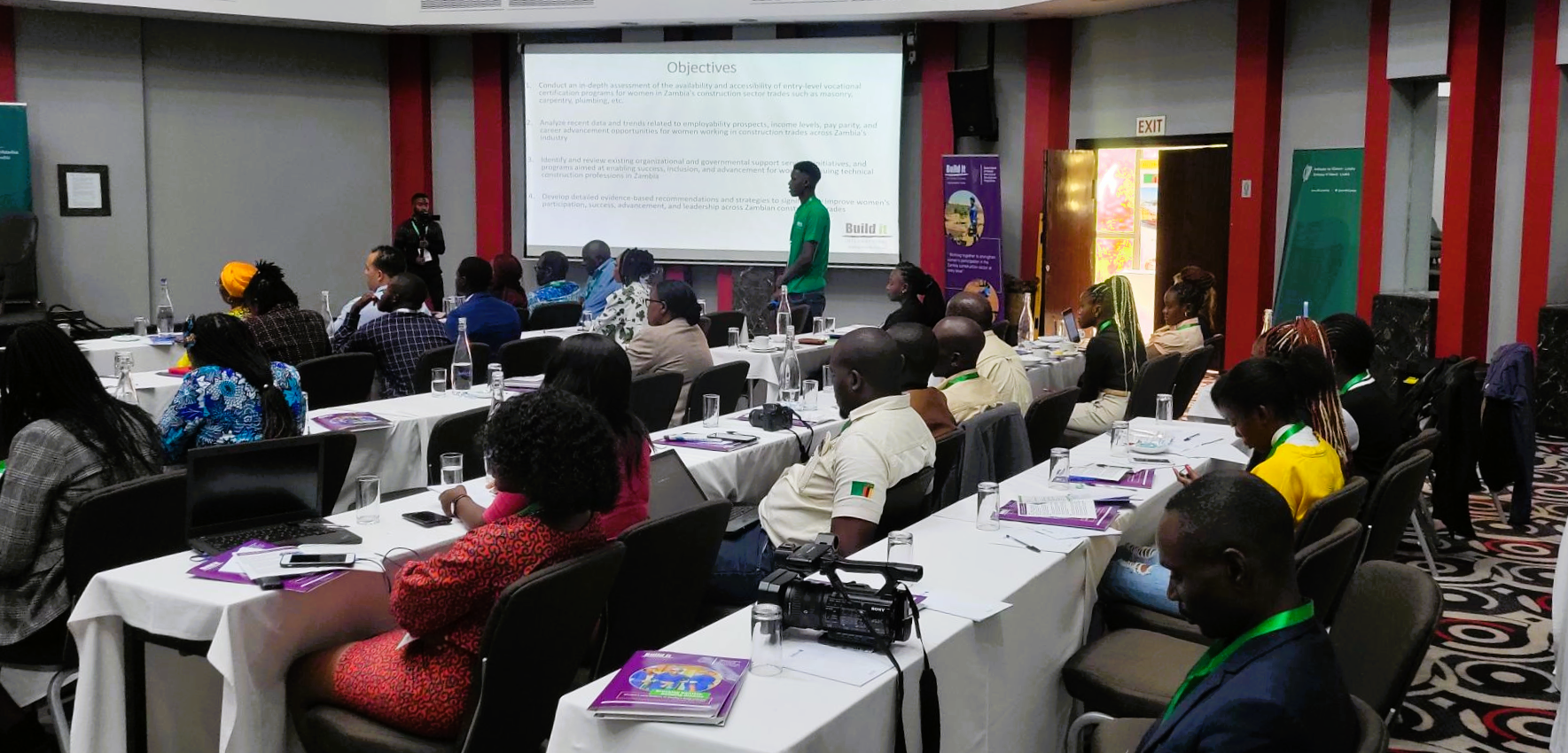
On 17 January 2024 we hosted our first major conference: Breaking barriers, building dreams: Women’s contributions to Zambia’s build industry.
In 2021 the construction sector in Zambia employed 166,331 people; of which 96.6% were male and only 3.4% were female [Central Statistical Office (2021) Zambia Labour Force Survey 2021].
The conference brought partners together to explore the challenges that women face in the sector, as well as the opportunities to increase their participation paving the way for a more empowered and inclusive workforce.
We were honoured to be joined by esteemed guests Ms. Bronagh Carr, Ambassador of the Republic of Ireland to Zambia and Mr Anthony Domingo, Director for Social Security under the Ministry of Labour and Social Security Zambia.
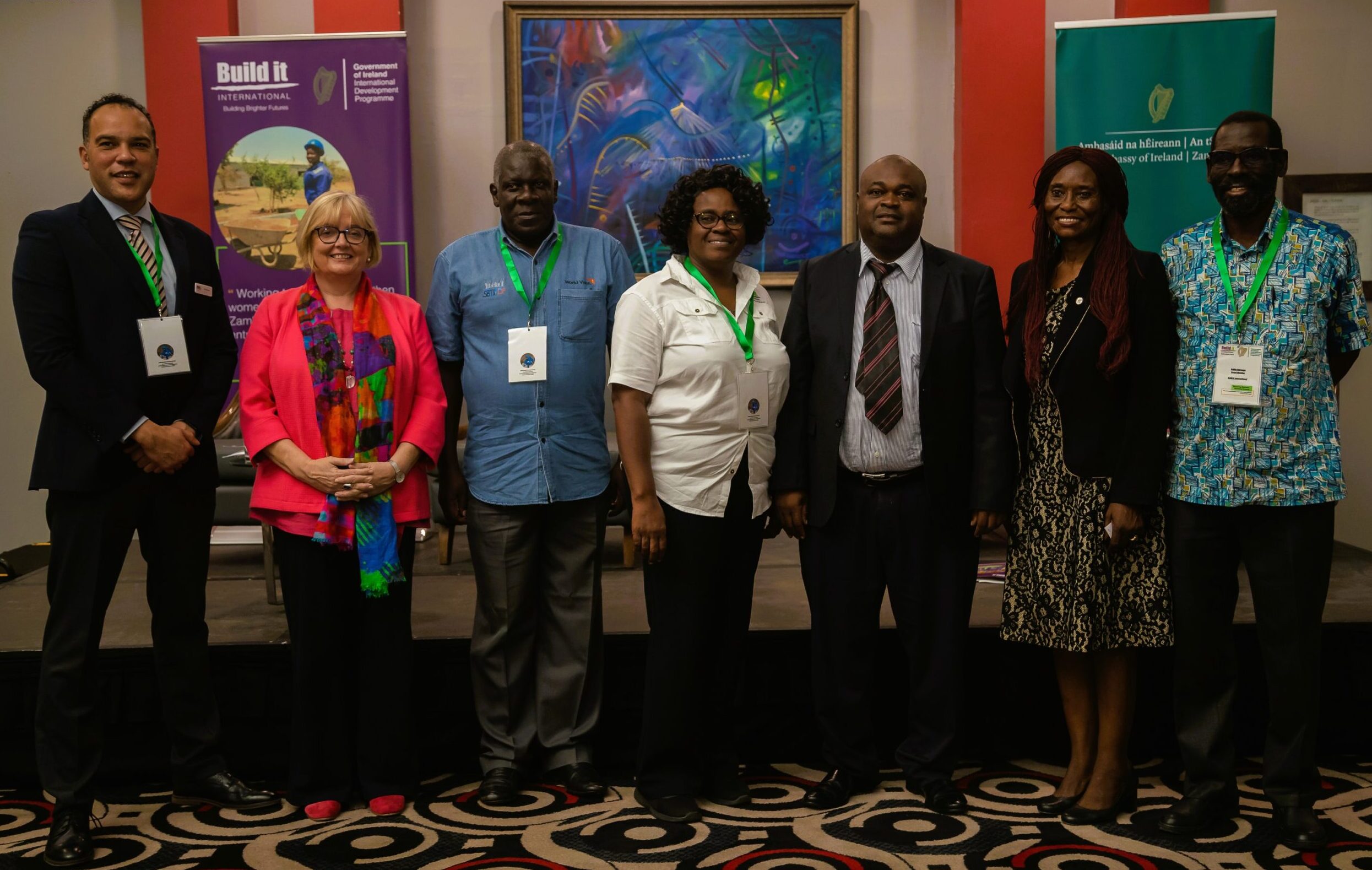
Left to right: Tum Kazunga (Chief Executive, Build It International (BII)), Ms. Bronagh Carr (Ambassador of the Republic of Ireland to Zambia), Wilson Sumaili (Trustee, BII), Chilufya Kasutu (Country Director, BII), Mr Anthony Domingo (Director for Social Security under the Ministry of Labour and Social Security Zambia), Lucie Kasanga (Chair of Trustees, BII), Griffin Nyirongo (Trustee, BII)
Opening session
Mildred Mwakamui (Corporate Engagement & Placement Co-ordinator, BII) presented a summary of Build It’s research to date on women in the Zambian construction sector. The findings were very much confirmed by the delegates in the room. This included: the perception of women in construction, a low understanding of construction skills from a young age, and income disparity when women are in industry.
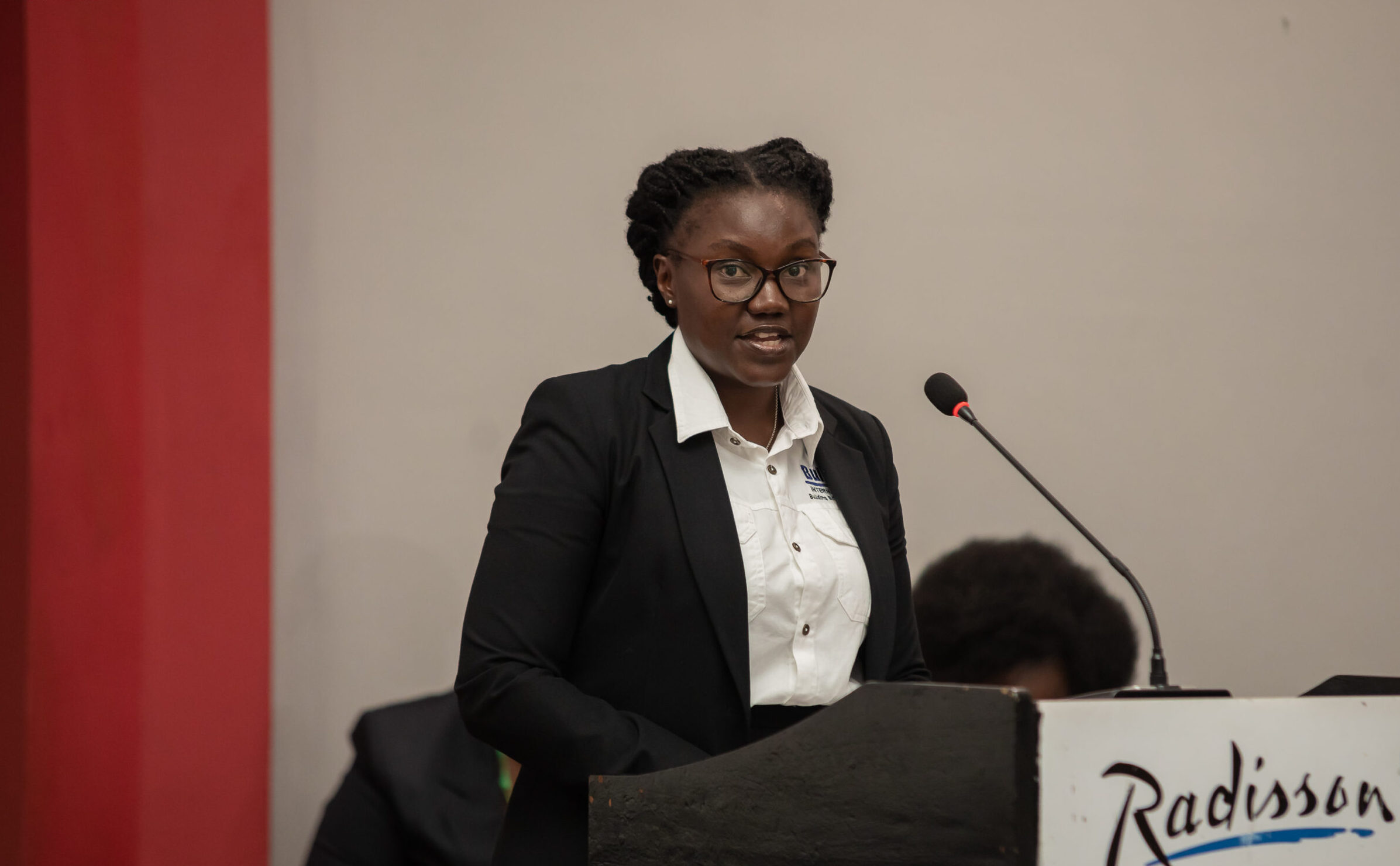
Mildred Mwakamui (Corporate Engagement & Placement Co-ordinator, BII)
Second session
This session was introduced by TEVETA Zambia and examined the challenges for women in the construction sector for entry-level training. The challenges that came out included sexual harassment and bullying (which has become an ongoing barrier throughout the conference), a lack of ‘female-friendly’ spaces e.g. wash facilities in training institutions and on-site during placements or employment, and often a lack of support and understanding from friends and family members.

Left to right: Headwoman Machaya (Machaya Village, Chibombo District), Mr. Gelson Maluma (Principal, Fountain Gates Crafts and Trade School), Mr. Victor Zumani (Planner, TEVETA), Mr. Patrick Mwamba (Head of Training into Work, BII). Eva Tembo (Graduate Student, BII)
Third session
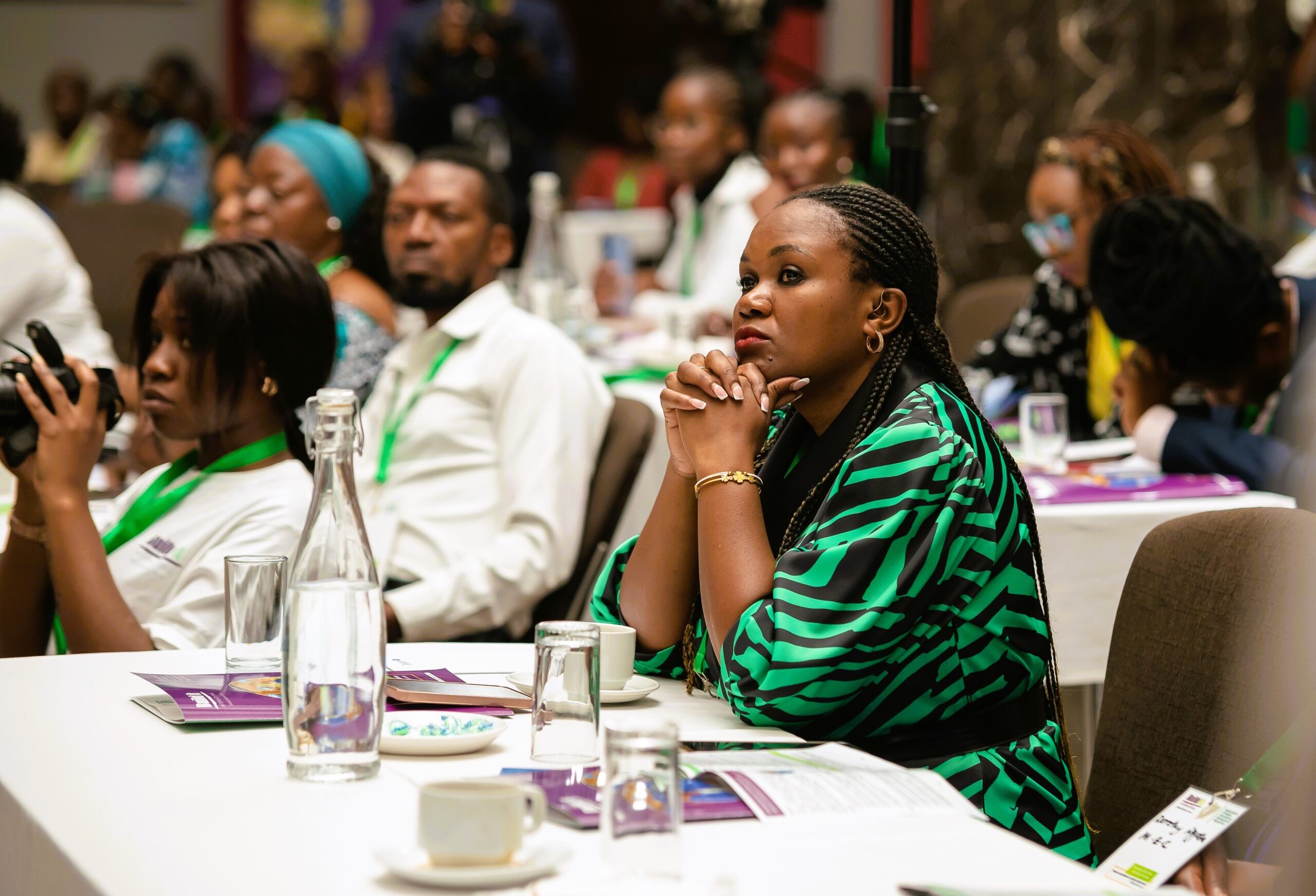
The third session explored creating an enabling environment for women. It was confirmed, again, that construction is “for men” – it is dominated by short term contracts which do not offer sustainable or regular income. Other key points highlighted were the extremely high ratio of men to females, anti-harassment policies not being implemented, and pay inequity.
The National Construction Council outlined the national procurement policy of 30% of works in the construction sector should be allocated to women, which is a great initiative to be recognised.

Left to right: Mr. Philip Tembo (Ministry of Education Curriculum Development Centre), Ms. Modester Banda Chifwaila (Vice-President, National Association of Medium and Small-scale Contractors), Eng. Lusubilo Ngambi (Monitoring and Compliance Specialist, National Council for Construction), Mr. Ngambi Zacharius (Managing Partner, McCoy Building Solutions)
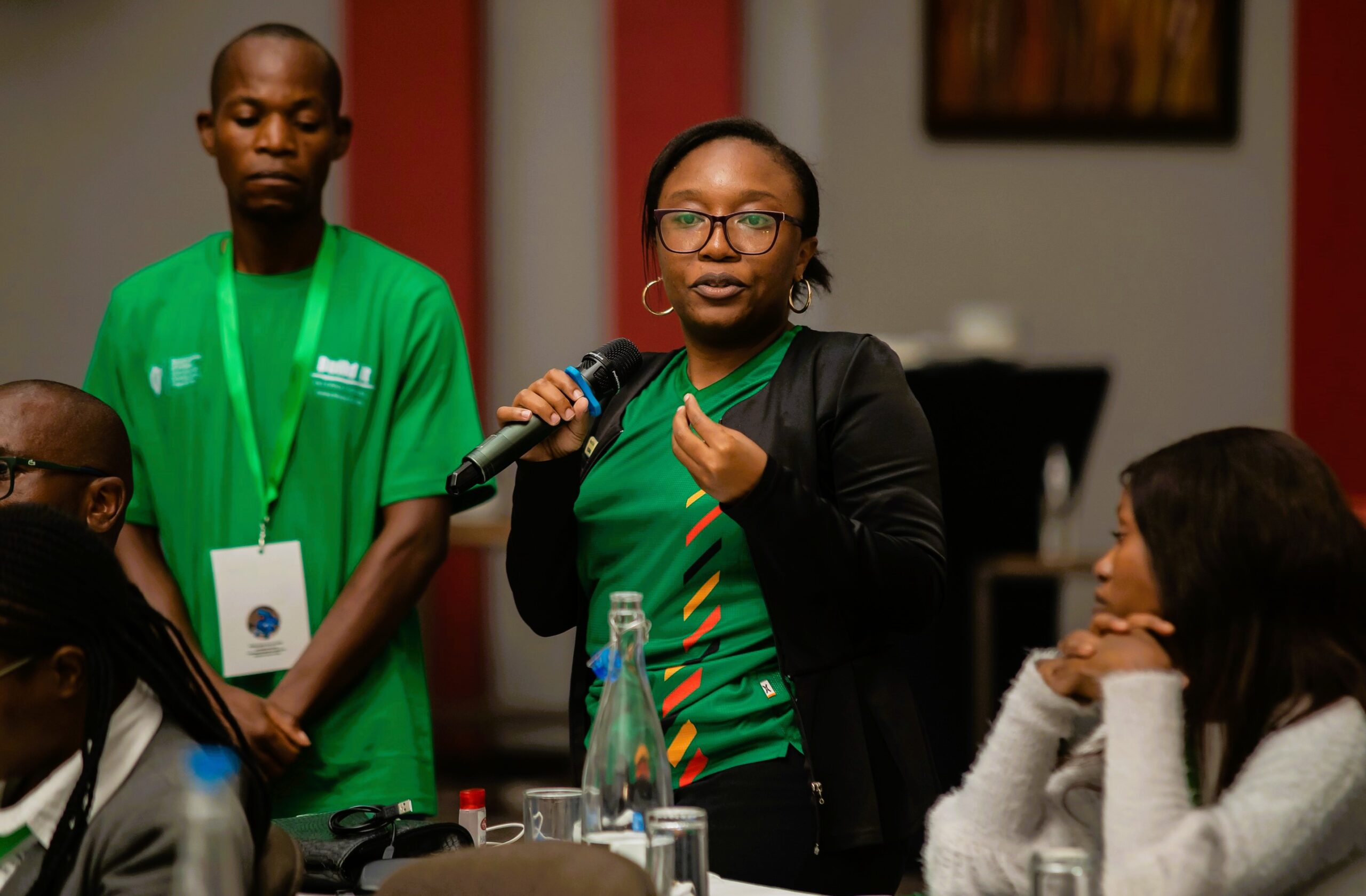
Fireside chat
Six women were invited onto the stage to share their personal experiences of working in the construction section.
There were inspirational stories and valuable insights, and tips for other women looking to work and thrive in construction.
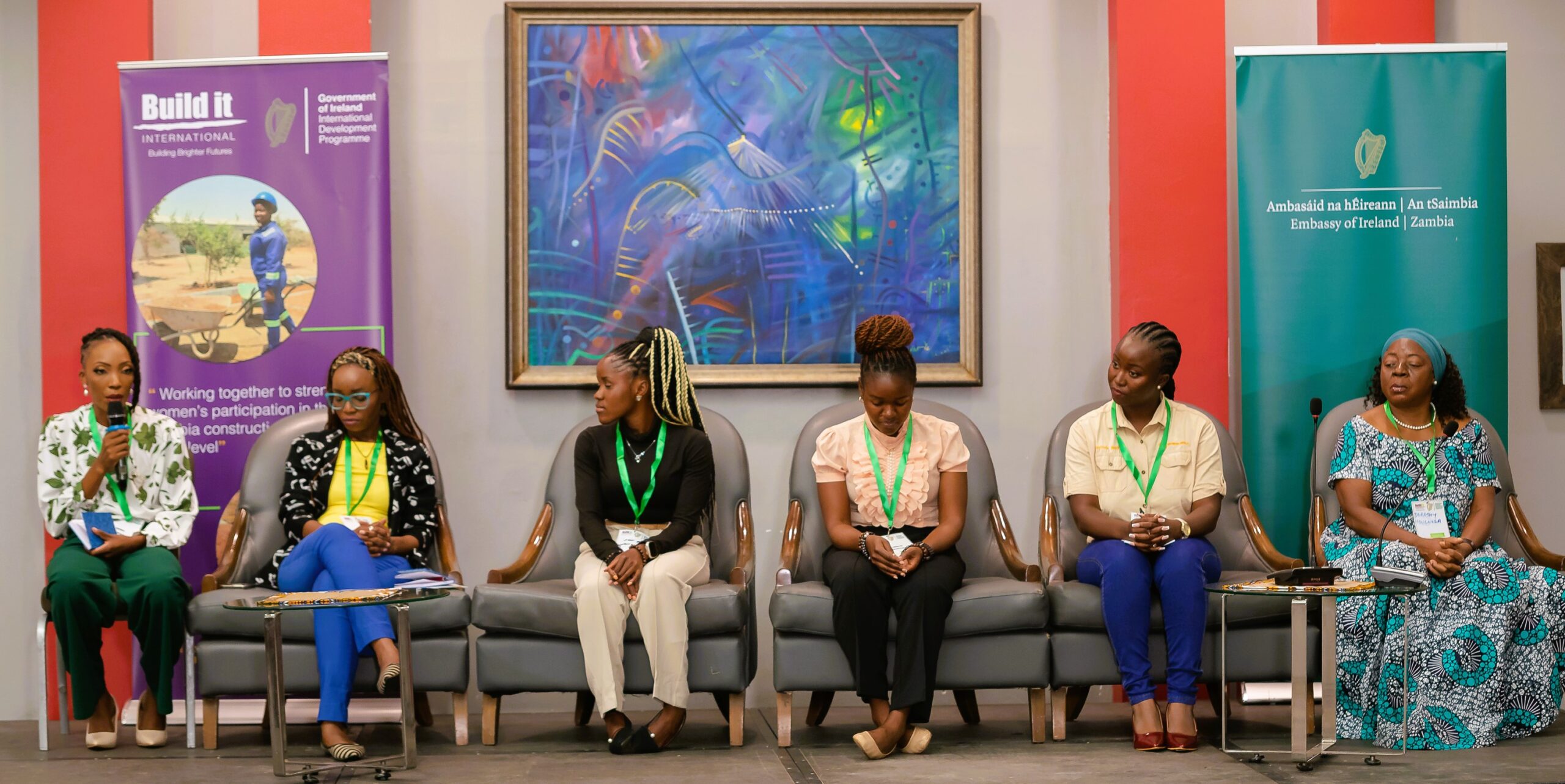
Left to right: Ms. Sarah Ngoma (Founder and CEO, Finest Fit Kitchens), Racheal Njobvu (Modern Refinement Ltd), the Phiri sisters (Graduates from Fountain Gates Crafts and Trades School), Eng. Kayinda Muchepa (Director and Chief Engineer, ABM Construction Company), Ms. Dorothy Mulwila (Chair, Zambia Association of Women in Construction).
Going forward
The conference highlighted some common barriers that women encounter in the construction sector.
Going forward two clear themes emerged:
- Advocacy: How can we support women in and into the construction sector?
- Influence: How can we influence stakeholders into action?
Key recommendations and action points from the conference will be shared shortly.
We are grateful to all the speakers, panelists, participants, and partners who made this conference such a success. Our sincere thanks to Government of Ireland through the Embassy of Ireland in Zambia for their support in taking forward this key agenda.
We hope that this conference will continue to spark dialogue and collaboration amongst partners to create a more inclusive and diverse construction sector in Zambia.