

30 April 2025
Recent Civil Engineering graduate Rosemary Njobvu shares her journey into construction – from what first inspired her, to the challenges she faces as a young woman entering the field. As her job search continues, Rosemary’s determination to carve out a future in the field remains unwavering.
My journey into the world of engineering began in Grade 8 at Rufunsa Girls Technical School. Courses like technical drawing, geometrical drawing, woodwork, and metalwork captured my interest and made me curious about how things are built and designed. It felt like I had found something I was truly passionate about. I wanted to know more! Through research and guidance, I discovered the field of engineering, and it felt like the perfect fit!
After completing my secondary education, I pursued a degree in Civil Engineering at Koneru Lakshmiah University in India.
The gender disparity in engineering was evident both in Zambia and India. In my class, I was the only black female civil engineering student. From the first year to the second year, before we branched out into our specific fields, there were fewer than five females in a class of over 30 students. Despite this, I was fortunate that my department did not exhibit much racism or discrimination.
However the experience was not without its challenges. The institution required all engineering students to take introductory courses across various departments. One of the departments had its own issues with racism, which was a new and unsettling experience for me. The language barrier and unfamiliar routines made it difficult to interact with others, and there was a pervasive narrative that doubted women’s capabilities in engineering.
Despite these challenges, my time in the Civil Engineering Department was mostly positive. Being the only woman meant I received extra attention from faculty. At times this was a little overwhelming, but it helped me stay focused. My academic results remained consistently above average from first year through to my final year.
I owe much of this success to my family. Coming from a background of academics, they stood by me every step of the way – financially, emotionally and spiritually. Their unwavering support gave me the strength to push forward.
After graduating in 2023, I was fortunate to secure a three-month internship with a construction company. It was an invaluable and eye-opening experience, helping me to transition from studying into the professional world.
The internship ended in 2024, and since then, I have been actively seeking new opportunities in the field. It has been a journey of persistence and resilience.
Because I studied abroad, I had to rebuild my network from scratch. It wasn’t easy. I spent time reaching out to engineers, asking for contacts and learning about opportunities wherever I could. Each connection helped me grow stronger and more informed.
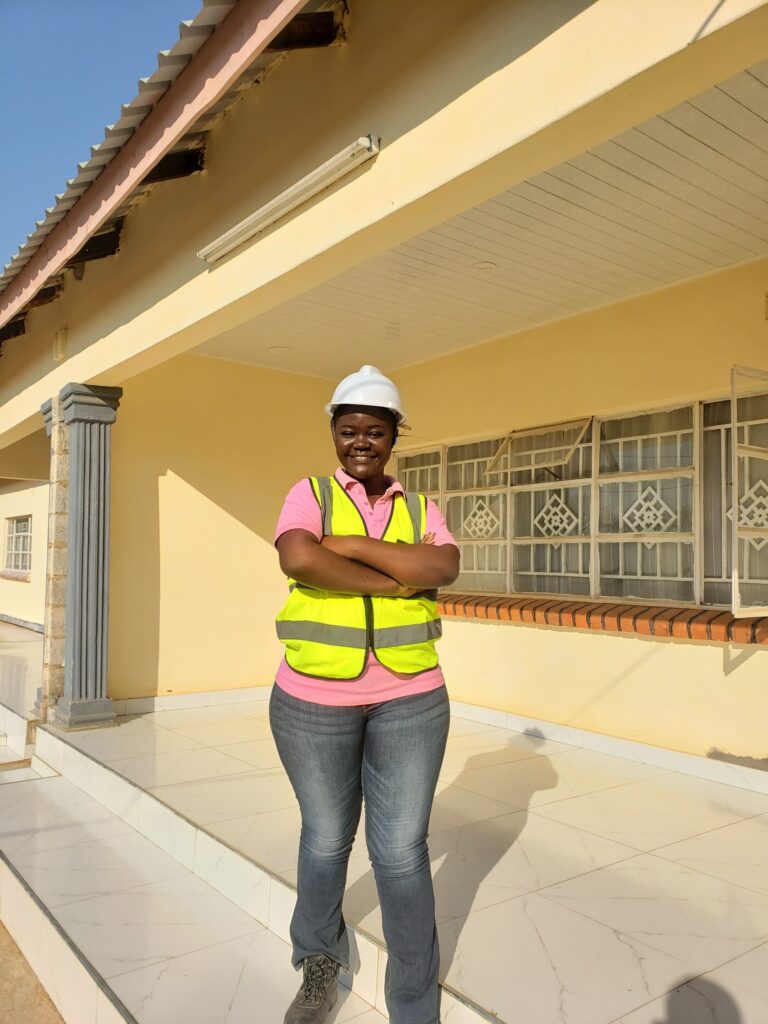
Navigating the job market has been challenging. I have attended multiple interviews where I faced both subtle and open biases. I remember arriving early for one interview – only to be interviewed last. It was clear from the glances and comments that I was being judged by my gender. Some employers assumed I was applying for HR or administrative roles simply because I was a woman. The interviews often felt like interrogations rather than conversations about my skills. The interviews lasted longer than those faced by my male counterparts.
During my job search, I have encountered inappropriate advances from potential employers. While my experiences were mostly passive, other women have faced far worse including threats tied to job offers. It isn’t easy, but I’ve learned to assert my boundaries calmly and clearly. Despite these challenges, I remain resilient and continue to push forward.
Gender bias remains a major hurdle in the engineering industry. Women often have to work twice as hard as their male counterparts for the same recognition. Passive disrespect – being overlooked for projects, not being approached for problem-solving – is a daily reality for many.
Implementing policies that promote gender equality is crucial to change this. Organisations should have diverse teams with qualified female engineers. Any form of gender-based violence and discrimination should be addressed head on.
Creating a more inclusive industry needs to start early. Young girls should be encouraged to explore engineering long before they choose their career paths. Exposure to technical fields, offering mentorship programmes and practical support can make a significant difference. We must build an industry where women feel seen, supported and celebrated.
Navigating the job market is tough, but also rewarding. Every interview, every challenge, and every victory teaches you something.
As I continue my job search, I remain committed to growing, learning and building a future where no young woman ever doubts her place in engineering. Our industry will be stronger when everyone feels like they truly belong.