
8 September 2025
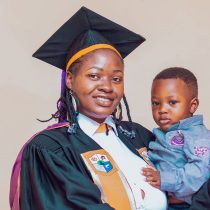
When Namuunza Busiku steps onto a construction site, she’s not just an engineer; she’s also a mother, a caregiver. Many women in construction carry a second, invisible workload – the unpaid care work that shapes careers, choices, and opportunities just as much as their professional roles. Namuunza shares her thoughts around this key topic:
“I didn’t set out to work in construction. I originally wanted to be a banker.
But in 2014, during a scholarship interview, a Malaysian professional mentioned Zambia was heading for a construction boom. That conversation sparked a change of heart.
I decided to study mechanical engineering at Copperbelt University – partly because it was considered one of the toughest paths, and I wanted that challenge.
Later, through networking with the Engineering Institution of Zambia, I learned how many disputes arise in the industry, and how they can completely derail projects. That’s when I set my long-term goal: to gain hands-on construction experience now, with the aim of eventually specialising in Alternative Dispute Resolution (ADR) to help resolve conflicts in this industry I love.
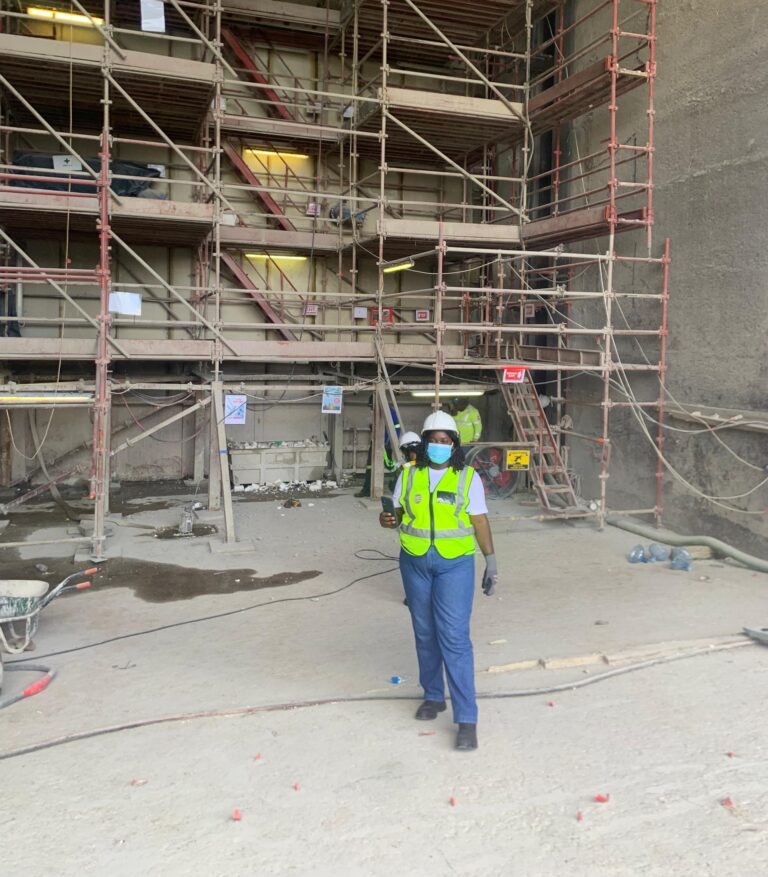
At the moment I am working on two major hydropower projects. On the Kariba Dam Rehabilitation Project, I act as the client – overseeing contractors, safeguarding environmental and social standards, and keeping the project on track.
On the Batoka Gorge Hydro-Electric Scheme, I support planning and technical preparation. No two days are alike, and that’s what excites me about this field.
Construction is a fast-paced, deadline-driven environment where every detail matters, and accountability is key. My job demands focus and precision. And my life outside work is just as intense.
Caregiving has been a huge part of my story. My son once suffered from a condition that required surgery and ongoing speech therapy. Even after the medical issue was resolved, his recovery plan needed my full attention. That experience shaped not only my home life, but also my career.
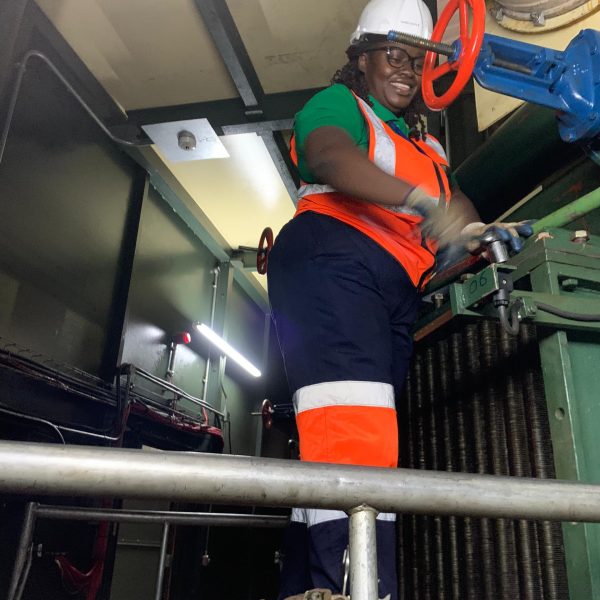
It truly takes a village to raise a child. My family has been an incredible source of support, and my children’s school provides structure and continuity. This ecosystem of support is what makes the balance possible.
But I’ve still had to turn down or miss opportunities because of these responsibilities. When I joined the Zambezi River Authority, I was supposed to be based full-time in Kariba – a role that would have deepened my mechanical engineering expertise. But I knew I couldn’t be away from my son while he was unwell, so I requested a transfer to Lusaka.
Thankfully, my employer supported me. I gave up one opportunity, but gained another: contributing to the Batoka Gorge project which has been an incredible learning experience. It’s not a regret. It’s just a real, tangible example of how caregiving responsibilities actively shape and redirect women’s careers.
Women in construction face unique challenges when it comes to care work.
Construction is a deadline-driven, site-based industry that demands high levels of focus. Caregiving is unpredictable and constant. When you combine the two, the risk of burnout is very real.
After a day onsite, the “second shift” begins at home. I’m fortunate to have an amazing support network, but there are days when I must push twice as hard just to keep up. I’ve been fortunate to work under understanding leadership. But the broader construction culture still assumes someone else is handling the care work. When you are that someone, the load you carry is heavy – and often invisible.
Support matters. My employer’s flexibility was crucial, and organisations like Beit-CURE Children’s Hospital have helped ease the strain for many parents by providing charitable paediatric care.
The strongest progress I’ve seen is on donor-funded projects. Under the World Bank’s ESS2 (Labor & Working Conditions), there is a much stronger emphasis on fair treatment, safe and healthy worksites, effective grievance mechanisms, and respectful workplaces. These standards indirectly create a more supportive environment for caregivers. But these practices shouldn’t be limited to certain projects. They should be the baseline across all construction sites.
Zambia’s upcoming implementation of ILO Convention 190 – which addresses workplace violence and harassment – is another critical step helping to create safer, more respectful workspaces for everyone.
There’s also the adoption of proven global strategies:
All this helps to retain talent and improve productivity. Care work isn’t a distraction from our jobs; it’s part of who we are. Supporting caregivers strengthens the strengthens the whole industry.
My advice is you don’t have to do it all at once, and you certainly don’t have to do it alone.
If you’re a woman juggling caregiving and a career in construction, my advice is simple: ask for what you need. Build a support system – friends, family, schools, childcare – and lean on it. Protect time for your own health and well-being.
Your contributions both at home and onsite are valuable. And if your heart is pulling you toward a niche, as mine did with ADR, follow it. The industry needs your unique perspective.
Together we can build a future where women don’t have to choose between their families and their careers.”